Professor Earle Abrahamson – EuroSoTL Board Member
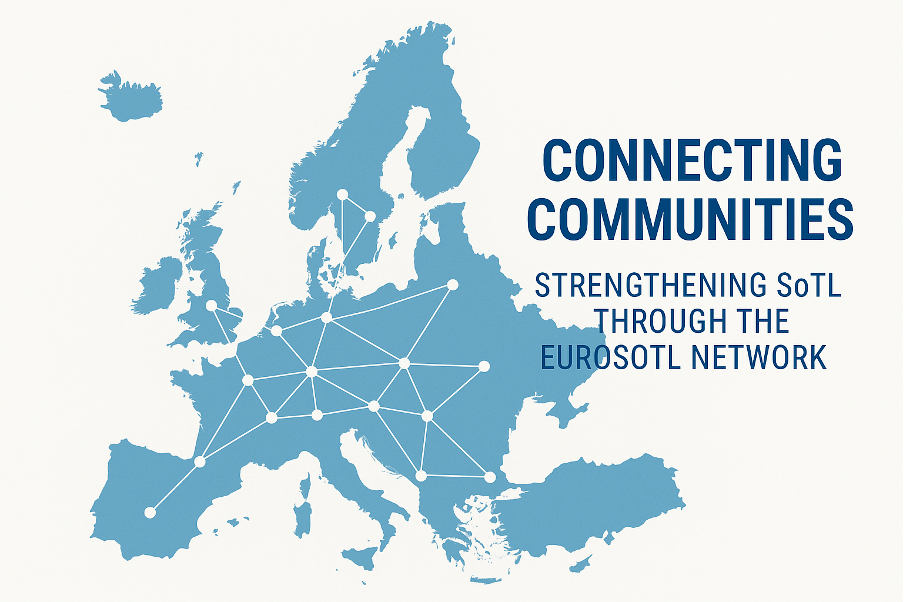
Across Europe, the Scholarship of Teaching and Learning (SoTL) sits in a complex and uneven landscape. In some countries, SoTL is well established, supported by active communities, institutional recognition schemes and a growing body of research. In others, the term itself is less familiar or even viewed with scepticism, seen as a distraction from disciplinary research or as work that lacks academic legitimacy. It is within this varied context that the EuroSoTL network has found its purpose: to connect, strengthen and give voice to those committed to exploring and advancing SoTL across Europe.
Building Bridges Across Diverse Contexts
EuroSoTL was founded on the belief that teaching and learning are scholarly endeavours worthy of collective inquiry. The network provides a space for educators, researchers and practitioners to come together, share ideas and learn from one another. By creating these connections, SoTL becomes more visible and more valued—it moves from the margins to a shared European conversation about educational quality and impact.
The power of networks like EuroSoTL lies in their ability to build bridges across difference. They bring together educators working in universities where SoTL is embedded in career frameworks, alongside colleagues in institutions where the concept is still emerging or contested. This blend of perspectives encourages mutual learning, helping each participant to see teaching and learning through new lenses. It also strengthens SoTL as a movement by creating solidarity among those working in different academic cultures and policy environments.
The Value and Promise of SoTL Networks
SoTL networks offer multiple benefits. They provide a platform for collaboration and visibility, enabling educators to share research that might otherwise remain local or unpublished. They promote confidence, particularly for those new to SoTL, by offering mentoring, examples of good practice, and supportive feedback. They also create opportunities for cross-institutional research, helping to build an evidence base that demonstrates SoTL’s impact on student learning and professional development.
Crucially, networks like EuroSoTL foster community and belonging. For educators in environments where SoTL is undervalued or misunderstood, these networks can be a source of encouragement and validation. They remind us that improving teaching and learning through scholarship is meaningful work that contributes to the academic mission just as much as disciplinary research does.
The Challenges of Connection
Despite their strengths, SoTL networks face ongoing challenges. Recognition and legitimacy remain uneven across Europe. In some countries, SoTL is supported through promotion pathways and institutional frameworks; in others, it is seen as peripheral or “soft” compared to traditional research outputs. This inconsistency can make it difficult for educators to prioritise SoTL or to find time and funding for it.
Language is another key barrier. While English is often used for international collaboration, this can unintentionally silence important work produced in other languages. As a result, some of the most valuable and innovative SoTL practices may remain invisible beyond their local context.
Geography and access also shape participation. Those in well-resourced universities or central regions may find it easier to connect and attend events, while colleagues in smaller or more remote institutions can struggle to engage. The risk is an overrepresentation of certain voices and perspectives, which can narrow the vision of what SoTL means in a truly European sense.
Towards a More Inclusive SoTL Future
The EuroSoTL network is actively working to address these challenges. Its structure is deliberately collaborative and decentralised, encouraging shared leadership and representation from across Europe. Hybrid events and digital platforms now make it easier for colleagues to participate regardless of location.
There is also growing recognition of the need for multilingual engagement—valuing SoTL written and presented in national languages, and exploring ways to translate or summarise key work so it can reach wider audiences. By recognising local practice and supporting diverse ways of doing SoTL, the network helps challenge the idea that there is only one way to be scholarly about teaching and learning.
Looking Ahead
The vision of EuroSoTL is one of connected diversity. It recognises that while SoTL may not yet hold equal status across Europe, its potential lies in dialogue, inclusivity and shared purpose. By bringing together educators from different systems, traditions and disciplines, the network demonstrates that SoTL is not a distraction from research but a vital extension of it—a way of researching our most universal academic activity: teaching.
As EuroSoTL continues to grow, its challenge is also its strength—to connect across uneven terrain, to listen as much as to lead, and to build a community where all voices can contribute to shaping the future of learning and teaching in Europe.